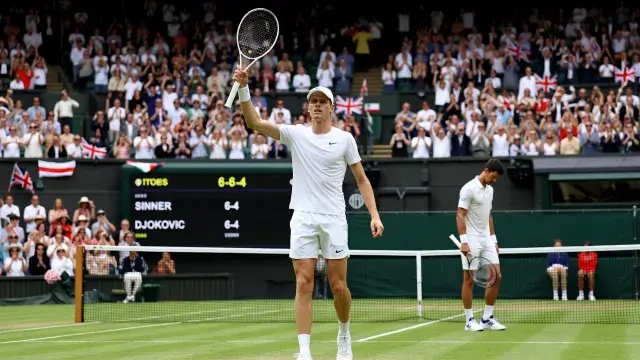
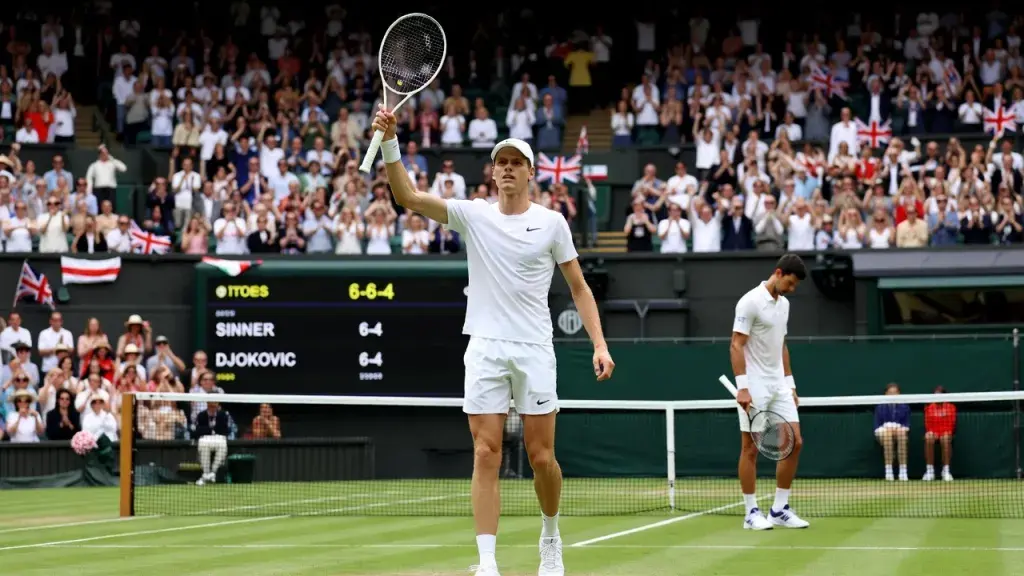
Jannik Sinner delivered one of the performances of his year to eliminate Novak Djokovic 6-4, 6-4, 6-4 in a commanding Centre Court semi-final on Friday, booking his place in the Wimbledon final against French Open champion Alexander Zverev. The world number one was measured, relentless and clinical throughout - exactly the qualities required to end a Djokovic campaign at a Grand Slam.
The result avenged Sinner's Australian Open semi-final defeat to Djokovic in January and extended his recent dominance over the 39-year-old Serb. In tennis, as in football, the moments that define careers often emerge from high-pressure rivalry - much like how iconic performances in derby matches, from the origi six goals in the Merseyside derby that cemented a player's legacy, can leave a permanent mark on sporting history. Sinner's handling of this rivalry is taking on a similar shape: he has now won nine consecutive matches against Zverev, and his record against Djokovic at the sport's biggest stages continues to grow.
For Djokovic, the defeat represents another painful near-miss in his pursuit of a record-breaking 25th Grand Slam singles title - one that would see him break his current tie with Margaret Court. The seven-time Wimbledon champion arrived at this semi-final with momentum, having won what became the longest quarter-final in Wimbledon history against third seed Felix Auger-Aliassime in a five-hour battle. That he pushed through that physical examination only to be swept aside in straight sets by Sinner speaks both to the Italian's level and to the limits that even elite longevity eventually encounters.
Sinner's Admiration Is Genuine - But So Is His Focus
After the match, Sinner was generous in his assessment of Djokovic's influence on the tour. "It's so amazing to see him still producing this kind of level," the Italian said. "It's a true inspiration for all of us and also the younger generation, how much a good mindset can do to your body and mind as well." The words rang sincerely, but Sinner was equally clear-eyed about what the match demanded of him. "Against Novak, if you want to play even, you need to play your best tennis," he said, acknowledging that mentally he knew he had to lift his level - and did. That self-awareness, the ability to identify what a match requires and then deliver it, is increasingly the hallmark of a champion in form.
Djokovic Signals He Is Not Done Yet
Despite the scoreline, Djokovic was not ready to make retirement announcements. The Serb indicated he intends to return to Wimbledon at least once more - a statement that will be welcomed by the sport, regardless of how his final years ultimately unfold. At 39, competing consistently at this level is a feat of both physical conditioning and psychological resilience that few athletes in any discipline have matched. Sinner acknowledged as much: "Seeing him around and having the honour to play against him, feeling the pressure against him - these matches hopefully can help me in the future." Djokovic, even in defeat, remains a measuring stick for the best in the world.
A Wimbledon Final That Carries Real Weight
Sunday's final against Alexander Zverev is far from a formality. Sinner may hold a 9-0 career record in their head-to-head, but Zverev is a different player to the one he has beaten repeatedly. The German's Roland Garros title earlier this season - his first Grand Slam - visibly changed him. Sinner acknowledged it plainly: "He tried for so long, and then when you finally achieve it, it's amazing and gives you this confidence boost." Zverev has carried that confidence into his maiden Wimbledon final with impressive efficiency, and Sinner expects a contest far removed from their previous encounters. For Sinner, Sunday offers a fifth Grand Slam title and a successful title defence on the lawns of the All England Club. For Zverev, it is the chance to prove that Roland Garros was not a solitary peak but the beginning of a sustained spell at the top. Both men have earned their place in the final. The tennis should be exceptional.