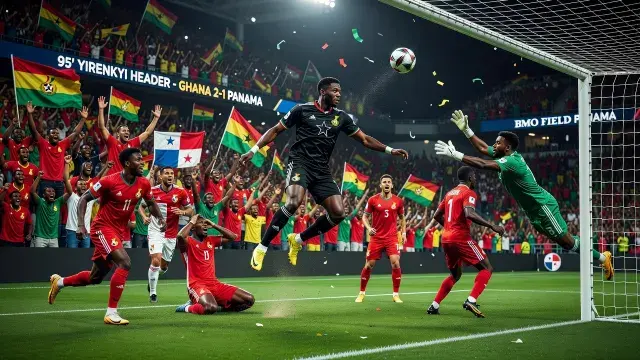
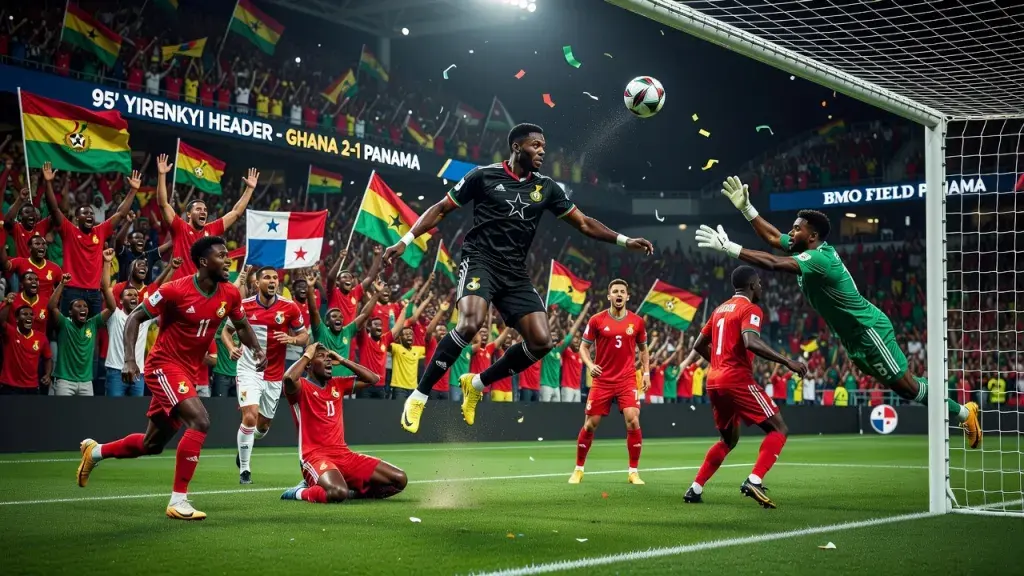
Ghana snatched a vital three points at BMO Field in Toronto with a goal deep into stoppage time, as substitute Caleb Yirenkyi headed home in the 95th minute to seal a 1-0 victory over Panama in their Group L opener. The result, hard-earned and anything but comfortable, lifts Carlos Queiroz's Black Stars temporarily into second place in the group, level on points with Croatia and behind England, who beat the same opponents 4-2 earlier in the day.
For the neutral, it was the kind of match that rewards patience - a gritty, tactical contest that only briefly caught fire. Ghana were poor in the first half, barely registering a meaningful shot on target, and at times appeared to be playing within themselves against a Panama side that moved the ball with more purpose and structure under Danish coach Thomas Christiansen. The gulf in first-half performance was stark enough that, much like the dramatic swings of fortune you occasionally see in combat sports - where one moment of precision can completely overturn the narrative, not unlike tracking bare knuckle boxing odds as a bout lurches from one competitor to the other - the match always carried the tension of a result that could fall either way without warning.
Panama created the sharper chances in the opening 45 minutes and might reasonably have gone into the break with a lead. Christiansen's side pressed intelligently, exploited the spaces Ghana's midfield left exposed, and generally looked the more organised unit. That they failed to convert was a combination of poor decision-making in front of goal and some resolute last-ditch defending from the Black Stars - though calling it organised resistance would be generous at that stage.
Semenyo Turns the Tide After the Break
Ghana's second-half performance bore little resemblance to what had come before it. Queiroz's half-time adjustments clearly had an effect, and Antoine Semenyo - the Bristol City winger who has been one of African football's more exciting attackers in recent seasons - was at the heart of the shift. Direct, aggressive, and difficult to contain, Semenyo repeatedly drove at Panama's defensive line and gave Ghana's attack a coherence it had entirely lacked in the opening period. He was involved in almost every meaningful attacking sequence Ghana produced after the break.
Panama, to their credit, did not simply retreat and defend their draw. Cristian Martínez and Ismael Diaz both created late openings that, on another night, might have won the match for the CONCACAF side. But a lack of clinical finishing - a persistent issue for a Panama team that relies heavily on collective structure rather than individual brilliance - ultimately cost them. They were wasteful when it mattered most, and the game punished them for it.
A Stoppage-Time Sucker Punch
With the match drifting towards what felt like an inevitable draw, Ghana struck with remarkable precision in the fifth minute of added time. A high-tempo combination between Semenyo and Brandon Thomas-Asante carved open the Panama defence, Thomas-Asante picking out Yirenkyi with a pinpoint delivery, and the Ghana forward made no mistake with his finish. It was the kind of late, clinical goal that can define a tournament group - turning a point into three and completely reordering the standings.
For Panama, it was a deeply cruel ending to a game they had contributed to meaningfully. For Ghana, it was precisely the type of moment that can accelerate a team's confidence heading into the tougher fixtures to come.
Ghana Face England, Panama Face Croatia on June 24th
The group picture now sharpens considerably. Ghana sit second with three points, and their reward is a meeting with England - a side that showed considerable firepower in demolishing Croatia 4-2. Queiroz will need a far more disciplined and structured Ghana performance across all 90 minutes to compete with the English, and the first-half showing against Panama must serve as a clear warning. The second-half version, with Semenyo at full throttle, is a different proposition altogether.
Panama, meanwhile, face Croatia knowing that defeat would effectively end their hopes of progressing. Christiansen's side showed enough technical quality and tactical intelligence to believe they can compete, but the inability to finish clear chances has now cost them dearly twice in 24 hours. Efficiency in front of goal will be the defining question when the group reaches its conclusion.