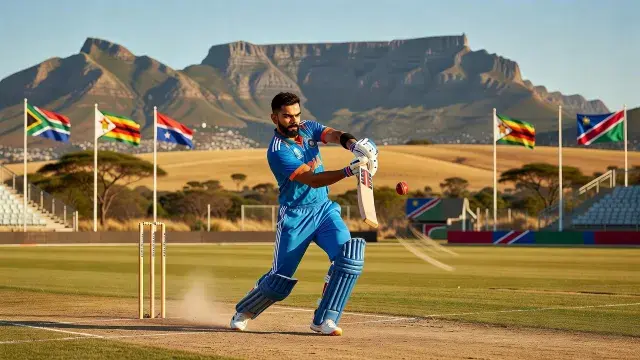
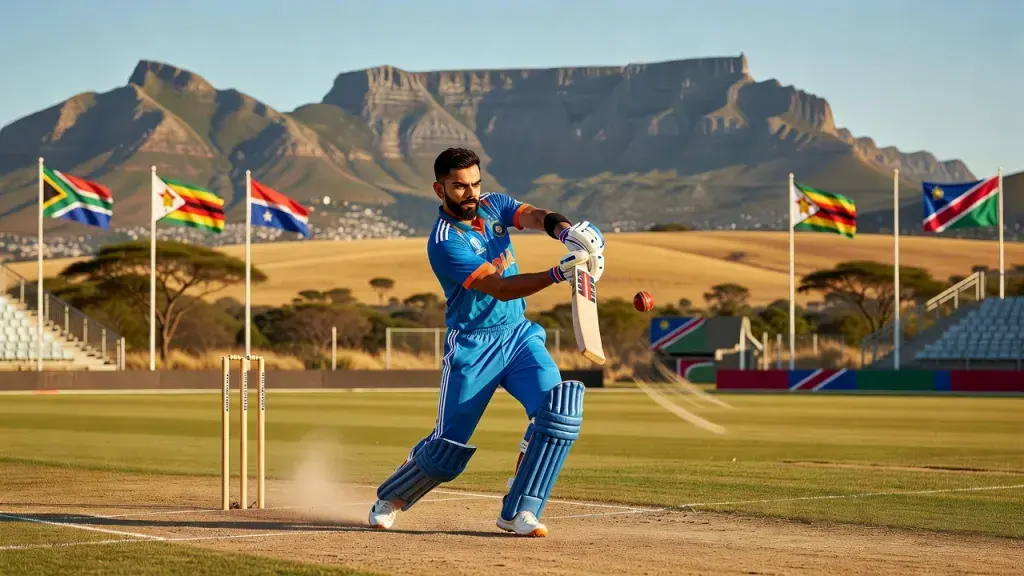
Former South Africa wicketkeeper-batter Mark Boucher has expressed full confidence that Virat Kohli will be present at the 2027 ICC Men's Cricket World Cup, co-hosted by South Africa, Zimbabwe, and Namibia. Speaking to ANI in Paarl on January 11, Boucher was unequivocal: fitness is not the question, desire is. And in his view, Kohli has both.
"Virat is going to be there. There's no doubt in my mind," Boucher said. "There's nothing about his fitness at all. It's just about whether he actually wants to play. And I think his mind is set on coming here and playing in another World Cup." Boucher's comments carry weight not only because of his long career in South African cricket but because he has operated at the highest level of the game as both player and coach - perspectives far removed from, say, the noise surrounding setka cup betting markets or other sporting distractions that pull the casual fan's attention away from the bigger picture of what is shaping up to be an exceptional World Cup cycle.
Boucher also pointed to something India's recent Test matches have quietly confirmed: when both Kohli and Rohit Sharma are absent from a lineup, there is a palpable void. "We've seen in India that Test cricket, where Rohit and Virat are not there, it does leave a hole," he noted. "The World Cup in South Africa would be a better tournament if Virat Kohli is involved. And obviously, for India, it would be fantastic if he stands there as well." It is a straightforward but pointed observation - elite tournaments are better when their biggest names participate, and Kohli remains one of the sport's most compelling box-office draws.
A Batter Who Answered His Critics With Runs
The backdrop to Boucher's endorsement is significant. Kohli, who has retired from both Test cricket and T20 internationals, concentrating solely on the 50-over format, entered something of a turbulent spell in late 2025 when he registered back-to-back ducks in ODIs in Australia. The criticism was swift and, in some corners, unforgiving - questions about whether a 36-year-old batter whose game had once relied on explosive technique and relentless fitness could still function at the top of a World Cup-calibre order.
Kohli responded in the most direct way available to him: he scored runs, consistently and heavily. Across six 50-over innings since those twin failures - four ODIs and two Vijay Hazare Trophy matches - he has not once fallen below 50. Three fifties and three centuries in that stretch represent a run of form that would satisfy any batter at any stage of their career. The three-match ODI series against South Africa in November-December was perhaps the most emphatic statement: scores of 135, 102, and an unbeaten 65 in successive innings against a quality attack on their home conditions.
The 2027 World Cup and What Is at Stake for India
The 2027 World Cup carries particular resonance. South Africa, Zimbabwe, and Namibia will share hosting duties, making it the first Men's ODI World Cup staged on African soil in the modern professional era. For the tournament's organisers, the commercial and cultural stakes are high - African cricket is at an inflection point, with emerging nations hungry for exposure and the continent's passionate fanbase eager to host the sport's most established global format.
For India, the implications are layered. The team navigated the 2023 World Cup on home soil all the way to the final before falling short, and the 2025 Champions Trophy cycle has kept the squad in a constant state of evaluation and transition. Kohli's retirement from Tests and T20Is means the 2027 tournament represents, in all likelihood, the final chapter of his international career in a major event setting. Boucher's read is that Kohli understands this fully - and that the prospect of a World Cup in South Africa, a country where he has performed memorably throughout his career, will be motivation enough.
Beyond the Numbers: Why This Matters
The broader point Boucher is making - carefully but clearly - is about experience as infrastructure. World Cups are not just won by technical skill or squad depth; they are shaped by the composure of players who have already stood in those pressure situations and delivered. Kohli, with the runs and the history to back it up, offers India something a younger batter simply cannot replicate on a two-year timeline. Whether the selectors, the management, and Kohli himself align on that vision will be one of the more compelling subplots of the run-up to 2027. For now, on current form, the argument for his inclusion essentially makes itself.