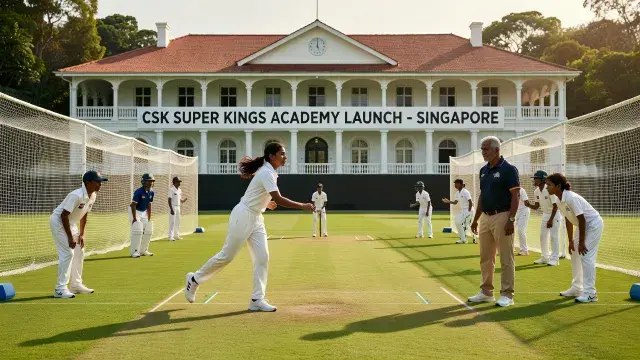
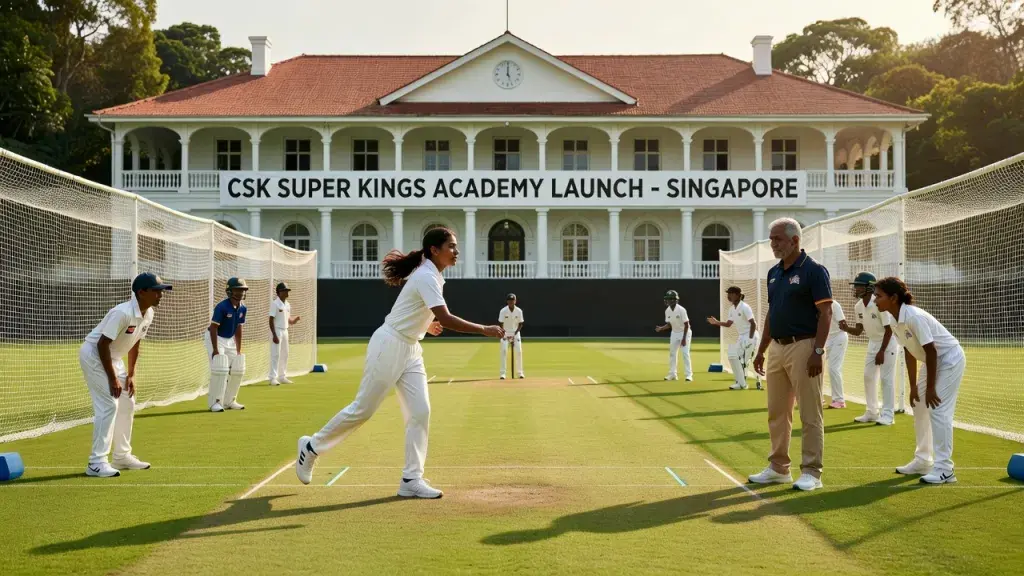
Chennai Super Kings have taken their cricketing ambitions beyond the boundary ropes of the IPL, officially opening the Super Kings Academy in Singapore on June 12 in partnership with the Singapore Cricket Club. The move marks the latest expansion of a growing grassroots network that already spans India, the United States, Canada and Australia, with the franchise positioning Singapore as a strategic gateway into Southeast Asian cricket.
The choice of Singapore is deliberate and layered. Geographically close to Chennai, the city-state sits at the heart of a region with a genuine cricketing history - one that, as SKA Global Head Coach Sriram Krishnamurthy points out, once saw Singapore competing in the same tournaments as Afghanistan before the two nations diverged sharply in cricketing development. The franchise's broader ambition in the region mirrors the kind of cross-sport market thinking seen in other disciplines: just as sharp operators look for the best bandy betting odds in niche but passionate sporting ecosystems, CSK are identifying cricket markets where structured investment can yield outsized long-term returns. With Asian nations accounting for roughly 40 per cent of ICC Test-playing membership, the demographic logic behind the expansion is hard to argue with.
Leading the programme is Sriram Krishnamurthy, a former first-division cricketer whose coaching résumé includes stints at Lancashire County Cricket Club, New Zealand Cricket and multiple domestic teams in India, alongside substantial experience in the Tamil Nadu Premier League. It is a CV built on the kind of unglamorous, systematic player development work that rarely makes headlines but consistently produces results. The partnership with the Singapore Cricket Club - an institution that already had around 280 young players enrolled in its academy before SKA's arrival - was driven by aligned values as much as logistical convenience. Sriram recalls watching India play at the SCC ground during the 1996 tournament, a small detail that speaks to the venue's place in the regional cricketing memory.
Opportunities Over Promises: A Franchise Philosophy Taken Global
Sriram is careful about the language he uses when discussing what young Singaporean cricketers stand to gain. He prefers "opportunities" to "pathways" - a distinction that may sound semantic but reflects a clear-eyed understanding of what a franchise academy can and cannot guarantee. What SKA can offer is access to the wider Super Kings ecosystem: net bowling sessions with professional teams, match exposure against international touring sides - New Zealand Cricket, Cricket West Indies and the Netherlands have all visited SKA facilities - and digital engagement with figures from within the Super Kings family, including former Australia batsman Mike Hussey in his capacity as a mental skills resource.
The three-franchise structure of the Super Kings group - CSK in the IPL, Texas Super Kings in Major League Cricket and Joburg Super Kings in South Africa's SA20 - gives the academy a breadth of professional environments that few grassroots programmes anywhere in the world can match. A talented teenager in Singapore is, at least theoretically, one exceptional performance away from being plugged into a genuinely global professional machine. The criteria for that step up are demanding, as Sriram makes clear, but the infrastructure to support it now exists in a way it simply did not before.
Values Before Technique: The Four Pillars Driving the Curriculum
Perhaps the most distinctive element of the Super Kings Academy model is its explicit focus on character development alongside cricket skills. The academy's curriculum is built around four core values: discipline, resilience, selflessness and problem-solving. The framework is drawn directly from the organisational culture of CSK, a franchise long associated with player longevity, loyalty and a calm, process-driven environment under MS Dhoni's leadership.
Sriram articulates the logic plainly. Talent gets players to the top; character keeps them there. In an era of social media pressures and increasingly individualistic youth culture, the academy is using cricket as a vehicle to build young people who can handle failure, subordinate personal ego to team need, and make independent decisions under pressure. The argument is not that soft skills replace technical excellence - it is that without them, technical excellence has a shelf life. For parents in Singapore's competitive educational environment, the pitch is equally direct: sport, done properly, teaches children to be self-sufficient.
Women's Cricket and the Longer Dream
The women's game is not an afterthought at SKA. Sriram points to Gunalan Kamalini - who joined the academy at 13 and, at just 16 and a half, has already represented the Indian senior women's team - as the clearest evidence that the development model produces results. In Tamil Nadu alone, the academy claims 102 female players currently within the state's elite selection cycle, a figure Sriram cites with evident pride.
Whether Singapore can develop a women's pipeline of comparable depth remains to be seen. The regional landscape is encouraging: Thailand has emerged as a genuine force in women's cricket, and Indonesia is developing quickly. With the Asian Games offering a tangible competitive target, the ambition is not merely to run coaching sessions but to build a genuine production line. CSK's global expansion has always been framed in commercial terms, and rightly so. But in Singapore, the sporting case is at least as compelling as the business one.