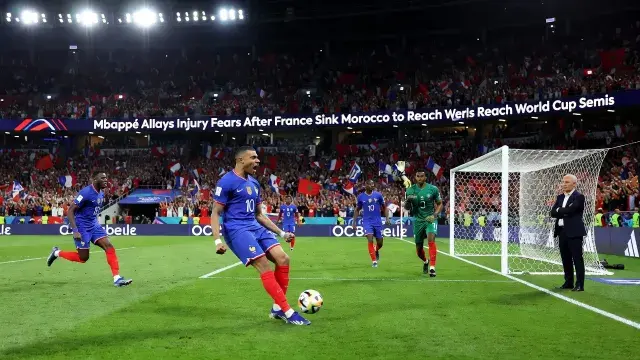
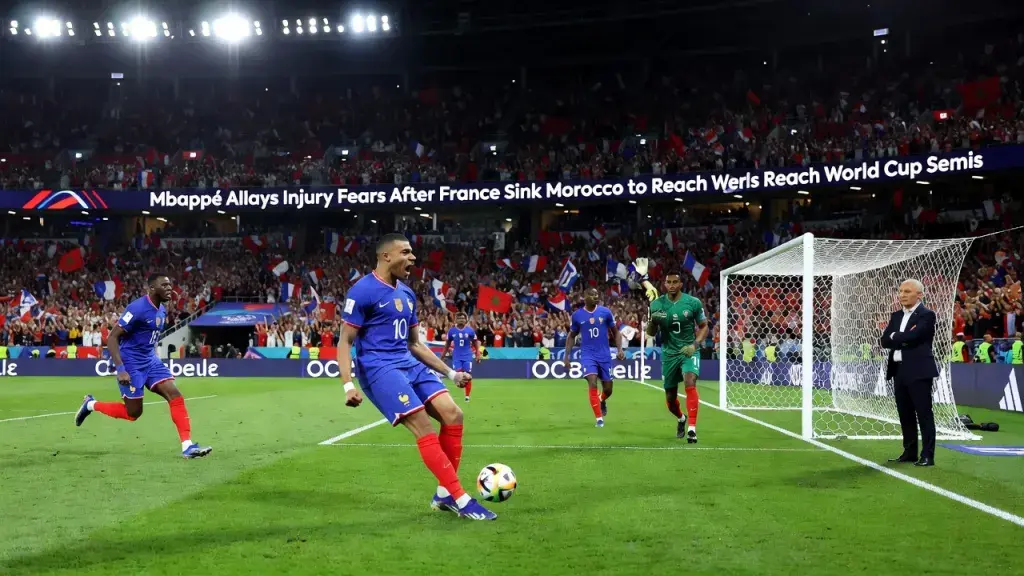
Kylian Mbappé moved swiftly to calm any concerns over his fitness on Thursday night after France's captain was substituted late in their 2026 World Cup quarter-final victory over Morocco at Boston Stadium. The 27-year-old had scored and assisted before making way for Jean-Philippe Mateta, with Les Bleus advancing to the last four where they will face either Belgium or Spain.
Mbappé's eighth goal of the tournament, a curling finish from the edge of the area on the hour mark, drew him level with Argentina's Lionel Messi in the tournament's scoring charts - a moment that underscored just how central he has been to France's campaign. For those tracking the scaloni montiel news ahead of Argentina's own fixtures, the race for the Golden Boot adds yet another layer of intrigue to what is shaping up as a landmark tournament. Six minutes after levelling with Messi, Mbappé slid a measured pass through to Ousmane Dembélé, who finished with equal composure to double France's advantage. "I have a minor ankle injury, but I'm completely fine," Mbappé said after the final whistle. "Mateta was in a better position to play the remaining minutes and was fitter at that moment. That's all that happened. I will be ready for the semi-final."
France manager Didier Deschamps, who has confirmed he will step down following the tournament, was measured but clearly satisfied. "We are exactly where we wanted to be," the veteran coach said. "The players have a duty to do everything they can to go as far as possible. We've cleared a major hurdle." Should France beat Spain or Belgium in the semis, they would become only the third national side after Germany and Brazil to reach three consecutive World Cup finals - a mark of the programme's remarkable consistency across two different squads and two different eras.
A Night Morocco Will Revisit With Mixed Feelings
Morocco arrived at Boston Stadium with purpose and a point to prove. They had made history in Qatar four years ago by becoming the first African side to reach a World Cup semi-final, and Thursday's quarter-final berth confirmed them as the first African nation to reach the last eight at successive tournaments. Yet history alone could not compensate for what the Atlas Lions would have recognised as a missed opportunity.
The match might have unfolded very differently had Mbappé converted an early penalty after Noussair Mazraoui brought him down inside the area. Following a three-minute VAR review, the France captain struck a weak effort that goalkeeper Yassine Bounou gathered comfortably to his left. Bounou then produced a sharp save to deny Désiré Doué moments later, offering Morocco a lifeline they ultimately failed to convert. The absence of striker Ismael Saibari through injury was palpable - without a genuine cutting edge, Morocco struggled to threaten a well-organised French backline and never truly looked like finding an equaliser after Mbappé broke the deadlock.
Morocco's new head coach Mohamed Ouahbi, who replaced Walid Regragui in March, refused to let the occasion obscure the need for honest reflection. "We cannot just say that we're happy and proud of what we've done," the 49-year-old said. "We need to move forward, and in order to do so, we have to be objective and do some self-criticism. We need to take stock of the situation if we want to progress. It's essential."
Africa's 2026 Reckoning: Promise, Progress and the Gap That Remains
The expanded 2026 World Cup gave African football its largest-ever representation, with ten squads entering the tournament - including debutants Cape Verde. Nine of those ten sides reached the last 32, a collective achievement that speaks to the continent's growing depth. But the line between presence and impact remained stark: only Morocco advanced to the quarter-finals, and they fell at that stage.
The structural challenges are well-documented - club versus country conflicts, fixture congestion in domestic leagues, under-resourced federations, and the physical and logistical toll on players spread across top European clubs. Saibari's absence illustrated a recurring vulnerability: when key players are unavailable, African squads often lack the squad depth to compensate at the highest level. There is genuine talent across the continent, but turning individual quality into collective tournament resilience at a World Cup remains the defining challenge for the next cycle. Ouahbi's words after the final whistle sounded less like a concession speech and more like a marker laid down for the future.
France Eye History as Deschamps Bids for Farewell Glory
For France, the focus now shifts entirely to the semi-final and the prospect of making history. Deschamps has overseen the most decorated era in the nation's football history, delivering the 2018 World Cup title in Russia and guiding the side to the final in Qatar in 2022, where they fell to Argentina on penalties after an extraordinary comeback. A third consecutive final appearance would cement his legacy beyond debate and give the squad's golden generation one final shot at the summit.
Mbappé, carrying the weight of both nation and tournament, appears determined to deliver it. His ankle concern will be monitored, but his tone was unambiguous. "I want the fans to continue watching the games, giving us the strength," he said. "Even though many of them aren't in the stadium, the players feel their energy." With eight goals, a crucial assist, and a semi-final ahead, France's captain has rarely looked more in control of a tournament - or more motivated to finish it on the highest possible note.